Every few weeks, more or less, an email lands with us here at MAP from an operator somewhere in Europe, and it is nearly always the same question wearing different words. We are going live in the US soon, our affiliate programme has run well in Europe for years, surely things cannot be all that different across the pond. And our reply is always the same slightly uncomfortable one, that the two markets only look similar from a distance, and the playbook they are so proud of back home will walk them straight into regulatory trouble if they carry it over unchanged.
So we thought we would put the whole conversation down in one place, the way we would explain it over a coffee, becuase the number of operators walking into the US market with the wrong assumptions has not gone down at all in the last couple of years, if anything it has gone up as more states open thier doors and more brands decide the water looks warm enough to jump in.
This one is written for operators, mind you, not for affiliates. If you are an affiliate trying to figure out which deal model to sign, we have a whole seperate piece on CPA versus revenue share versus hybrid that will serve you much better than this one will.
So What Actually Makes The US So Different Then#
The first thing you have to get your head around, and honestly it is the thing that everything else in this article hangs off, is that there is no such thing as "the US market" in any single unified sense. There is New Jersey, and there is Pennsylvania, and there is Michigan, and each one of them is its own little country as far as your affiliate programme is concerned, with its own regulator, its own licensing paperwork, its own rules about what an affiliate is even allowed to say in an advert, and its own opinion about how you are supposed to pay the people sending you players.
In Europe you got used to passporting your way around, or at worst dealing with a handful of national regulators who at least talk to each other now and again. In the US, at the time of writing, real-money online casino is live in only a small handful of states, roughly seven depending on how you count, while sports betting has spread across thirty-plus. That gap surprises people again and again and again. Operators show up expecting a continent and what they actually get is a patchwork, and the patchwork changes every legislative session, so whatever map you drew last year is already a little bit wrong by now.
What this means practically is that your affiliate programme cannot be one programme. It has to behave like several programmes wearing one coat. An affiliate who is registered and approved to promote you in New Jersey may not be cleared for Michigan, a creative that is compliant in Pennsylvania might land you a fine somewhere else, and the geolocation piece, making sure the player who clicked actually deposits from inside the right state lines, sits underneath all of it like a foundation you never think about untill it cracks.
The Licensing Bit Nobody Warns You About#
Here is the part that genuinely catches European operators off guard, and we have watched it happen enough times now to know it is not a one-off. In most regulated US states, your affiliates themselves need to be registered or licensed with the state regulator before they can legally send you a single player. Not just you, the operator. Them. The actual affiliate businesses.
The exact shape of that paperwork varies state by state, some states run a fairly light registration process for affiliates on flat-fee deals while asking for a heavier vendor licence from anyone on a revenue share arrangement, and other states want everybody through the full wringer regardless. We are deliberately not going to print a table of fees and form numbers here, partly becuase it would be out of date within months, and partly becuase you should be getting that answer from the regulator or your legal counsel and not from a blog, fair is fair.
But the operational headache is the bit we can speak to, becuase it lands on the affiliate team, not the lawyers. Somebody inside your programme now has to track which affiliates hold which approvals in which states, which ones have applications pending, which ones let a registration lapse over the summer without telling anybody, and your platform has to be able to switch traffic on and off at that level of granularity. If your affiliate software cannot restrict an individual partner by geo, you will end up managing this in a spreadsheet, and a spreadsheet is exactly the kind of place where a lapsed registration hides its self quietly for six months and then turns up in an audit. A wider look at what a proper stack should be doing for you is in our operator’s overview of casino affiliate software.
And audits do come. US regulators take the view that the operator carries responsibility for the marketing done in thier name, so when an affiliate steps out of line, the questions land on your desk first. Keep records of everything, approvals, creatives, the lot. You will definately thank yourself later.
Why Your European Playbook Will Only Half Work#
There is a temptation, specially among operators who have run big programmes in the UK or the Nordics, to treat the US as just another territory rollout. Same commission structures, same promo calendar, same affiliate contacts even, since alot of the big European affiliate companies have opened US arms. And look, some of it does carry over, the fundamentals of the channel are the fundamentals of the channel, no two ways about it.
But three things behave very differently, and each one of them has burned somebody we know.

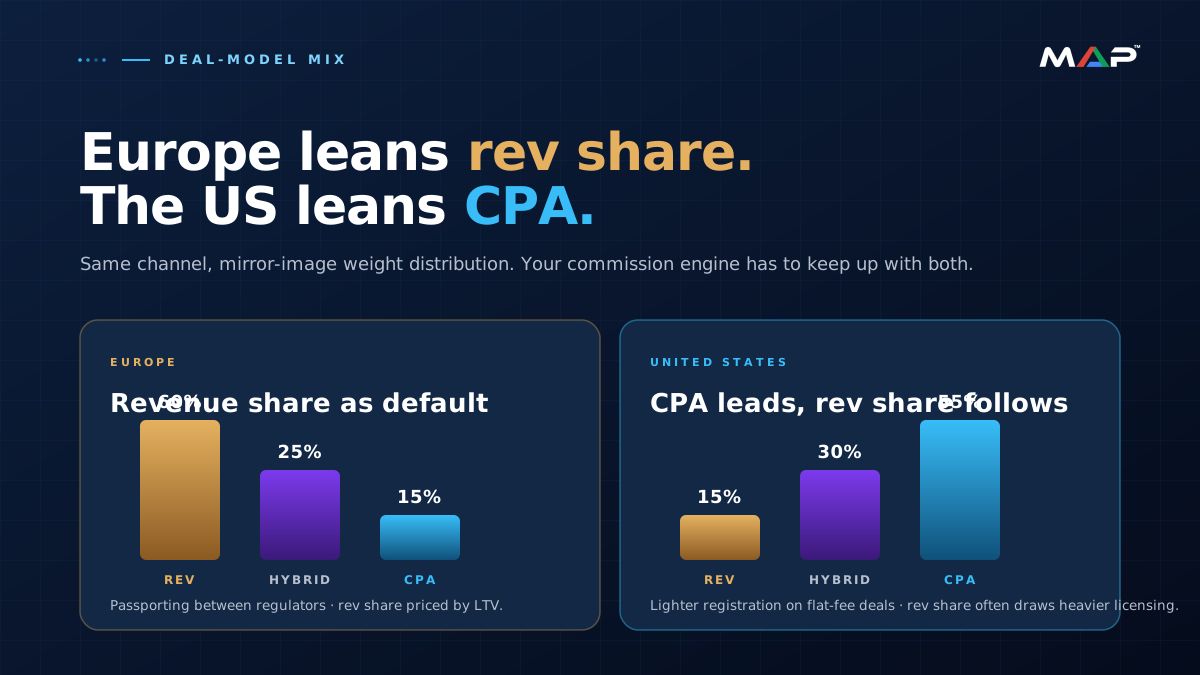
The first is the deal-model mix. The US affiliate market leans much harder on CPA than Europe does, partly for the licensing reasons we just went through, since flat-fee deals sometimes attract lighter registration requirements than revenue share does in certain states, and partly becuase the big US-facing affiliates simply grew up in that model and price thier inventory accordingly. If your commission engine was built assuming revenue share as the default, and plenty of European-built setups quietly were, you are going to spend your first six months fighting your own tooling.
The second is content compliance. What an affiliate is allowed to say about bonuses, the disclaimers they have to carry, responsible-gambling language, the rules differ state to state and they are enforced with real teeth. You cannot just hand over a creative pack and hope for the best, you need approval workflows, you need to know which version of which banner is running where, and when a regulator asks you in eight months time which creative a given affiliate was running in March, you had better be able to answer without breaking into a sweat.
The third one is the calendar, which over there runs to its own rhythm entirely, NFL season, March college basketball, state launch dates, and the affiliate demand curve moves with all of it. Operators who plan thier affiliate spend on a European calendar keep finding themselves flat-footed in September, again and again, honestly it is a little bit funny to watch from the outside and a lot less funny from the inside.
Tracking Is Where The Whole Thing Lives Or Dies#
Now we get to the part that is closest to our own hearts over here, becuase tracking in the US is not just a performance question, it is a compliance question, and the two of them tangle togather in ways Europe never quite prepared you for.
Start with the basics. Pixel-based tracking, the old way, drops a cookie in the player's browser and hopes for the best. In a market where the player might click an affiliate link on thier phone during a commute through one state and then deposit from a laptop at home in another, hope is not a strategy, truly it is not. Server-to-server postback tracking, where the conversion is reported directly between the operator's system and the tracking platform with no browser in the middle, is basicly the minimum grown-up standard now, and cross-device attribution on top of it is what stops you paying two affiliates for one player or, worse, paying nobody and having your best partner quietly conclude you are shaving thier numbers.
That last point deserves a moment, becuase trust is the actual currency of this channel. The big US affiliates have seen every trick and every excuse, and the operators they scale with are the ones whose numbers they can verify. Real-time reporting the affiliate can log into thier own self, clean audit trails showing every conversion and every adjustment, that is what keeps a top partner pushing your brand instead of the one on the next stand at the conference.
And then there is fraud, which in the US wears some specific costumes. Bonus abuse rings running through affiliate links, self-referral schemes, traffic that geolocates fine at click time but not at deposit time. Machine-learning fraud detection that flags the weird patterns before payout day is not a luxury item anymore, it is the thing standing between your finance team and a very awkward quarterly conversation. We have onboarded a lot of operators down the years over here at MAP, and the ones who come to us after a fraud incident always say some version of the same sentence, we thought our volumes were too small for anyone to bother targetting us. Nobody is too small, sadly.
Paying People Without Making A Mess Of It#
Payouts sound like the boring bit and then they eat your whole month. America adds a few of its own wrinkles here too. Your affiliates will be a mix of big companies on negotiated hybrid deals, mid-size operations on CPA, and a long tail on whatever they signed up under, and every one of them may need different terms in different states, since a deal that is fine in one state may need restructuring in another for the licensing reasons we went through earlier.
So the commission engine underneath your programme has to handle real granularity, different rates by brand, by geo, by traffic source, by individual affiliate, and it has to do multi-tier properly as well, becuase master and sub-affiliate arrangements are alive and well in the US and the override maths gets messy fast when it is done by hand. If you are going to neogtiate custom deals, and in the US you absolutely will, the platform has to keep up with whatever you agree, otherwise you end up loosing hours every month to manual adjustments, and manual adjustments are where mistakes live.
One more thing while we are here. Keep your reporting currency situation clean from day one. Plenty of operators entering the US are running European entities alongside the new American one, and if your platform cannot handle multi-currency reporting without fudging it, month-end reconciliation will slowly turn its self into everyone's least favourite recurring meeting.
So Where Does MAP Fit Into All Of This#
Fair question, and we will keep it honest rather than turning this into a brochure. MAP is our affiliate marketing platform, built in London, running in the cloud, and used today by 250+ iGaming brands across 20+ countries, and yes, that includes US-licensed operators, which matters here for one simple reason. A platform that has already been through US operator onboarding has already met the audit-trail expectations, the role-based access requirements, the geo-level controls that this whole article has been circling around. You are not the test case.
The pieces we have talked about all through this piece are the pieces MAP was built around. Server-to-server postback tracking and cross-device attribution on the tracking side. A commission engine that goes down to brand, geo, source and individual affiliate, with multi-tier override tracking for the master and sub arrangements. Real-time reporting your partners can check for thier own selves, ML fraud detection watching the traffic, audit trails and role-based access for the compliance team, multi-currency and multi-language for the operators running more than one entity, and a white-label partner portal so the whole thing carries your brand and not ours.
And becuase we know the integration project is the part everybody secretly dreads, we build the integrations for you during onboarding, free, with an actual account manager you can talk to rather than a ticket queue. That is the bit our operators mention most when they tell other people about us, believe us on this one.
To see how other operators have set thier US programmes up, have a look at why operators move to MAP, or just book your own self a demo and bring your hardest questions along.
The Short Version#
If you only remember five things from this whole ramble, make it these five.
- 1The US is a patchwork of state markets, not one market. Your programme needs geo-level controls from day one.
- 2Your affiliates need thier own state registrations in most regulated states. Track approval status per partner, per state, inside your platform.
- 3CPA leads the deal mix in the US far more than in Europe. Make sure your commission tooling is not fighting you.
- 4S2S postback tracking, cross-device attribution and audit trails are compliance equipment in the US, not nice-to-haves.
- 5Fraud detection before payout day. Nobody is too small to be targetted.
Frequently Asked Questions#
Do affiliates really need a licence to promote a US casino brand?
In most regulated states, yes, some form of registration or licence with the state regulator, and the weight of that paperwork often depends on the deal model, with revenue share arrangements generally drawing heavier requirements than flat-fee deals. The exact rules shift state by state and session by session, so build the checking of it into your onboarding process and lean on proper legal advice for the specifics rather than a blog, this one included.
Is revenue share dead in the US then?
Not dead, no, but it is not the default the way it became in Europe. Plenty of US deals are CPA or hybrid, partly for licensing reasons and partly just market habit. What matters for you as an operator is having a platform that handles all three cleanly, becuase you will end up running all three side by side by side whether you planned to or not.
Can we run our US programme on the same platform as our European one?
You can, and honestly you probably should, as long as the platform can genuinely separate the two, seperate geo controls, seperate compliance settings, multi-currency reporting, role-based access so the right teams see the right things. One platform with proper separation beats two platforms and a monthly copy-paste exercise every single time.
How long does it take to get an affiliate programme live in a new state?
The software side moves quick, days rather than months, specially if integrations are being built for you. The long pole is almost always the regulatory side, your own approvals and your affiliates' registrations, which can run to months depending on the state. Start the paperwork long before you want the traffic, that is the honest answer.
Pulling It All Together#
The US is the most exciting thing to happen to casino affiliate marketing in years and years, and it is also the easiest place we have ever seen a well-run European operator make an expensive mess, usually not through recklessness but through the quiet assumption that what worked in Malta will work in Michigan. It half will. The half that does not is licensing, tracking rigour, and the deal-model mix, and all three of those run straight through your affiliate platform.
Get the foundations right early, becuase retrofitting compliance onto a live programme is miserable work, we have watched people do it and nobody enjoyed themselves. And if you would like to talk any of this through with people who have already walked operators into the US market, drop us a line or book your own self a demo, we are always happy to have the coffee-length version of this conversation properly.